
Errors and varieties: what actually counts
Two words get used interchangeably and mean opposite things. An error is something that went wrong during the making of one item or a small run. A variety is a difference built into the die or plate itself, so it repeats on every item made with that tool. The first is an accident, the second is a fingerprint of the production – and almost everything else people find is neither, just damage that happened afterwards.
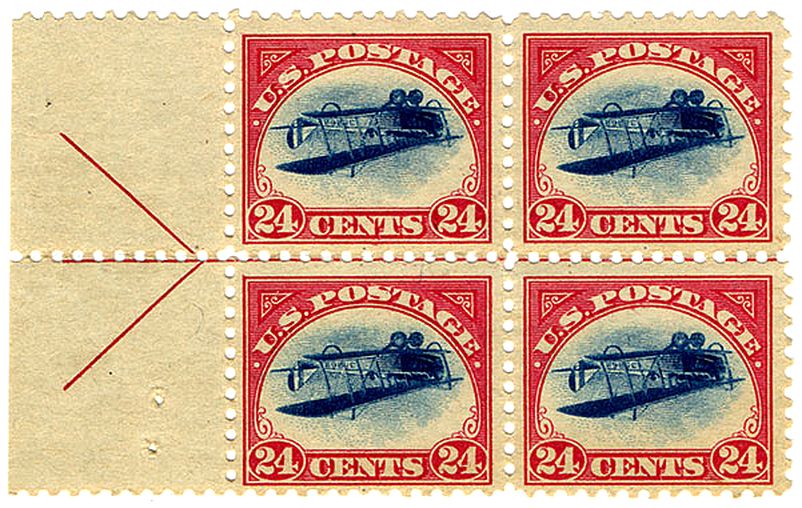
Why the distinction decides everything
A variety is repeatable: once identified, collectors know how many exist in principle and what to compare against, and it earns a catalogue line of its own. An error is not repeatable, so each one is judged on its own – how far the process went wrong, whether it escaped into circulation at all, and whether it can be proved. That is why a documented variety can be looked up and a claimed error usually has to be demonstrated.
On coins
- Varieties. Differences of the working die: the shape of a figure, the position and count of small elements, the spacing of lettering. These are read exactly as described in the guide to the circulation series and its die varieties.
- Striking errors. Off-centre strikes, double strikes, a blank that was never struck, a coin struck on the wrong blank.
- Die state, not variety. A die that cracked or wore during use leaves raised lines or soft detail. It is a stage of the die's life, and it is described separately from a true variety.
- Not errors at all. Rim knocks, scratches, corrosion, drilled holes and anything caused after the coin left the press.
On stamps
- Varieties. Plate flaws that repeat in the same position on every sheet, retouched areas, differences of perforation or paper between printings.
- Errors. A missing colour, an inverted element, a wrongly perforated sheet, an overprint applied upside down or to the wrong stamp.
- Overprints deserve care. An overprint is a normal production step, as on the 1961 stamp above – it becomes an error only when it is misplaced, inverted or doubled, and forged overprints are common precisely because the base stamp is cheap.
- Not errors at all. Trimmed perforations, thin spots from hinges, creases and colour changes caused by light or damp.
The three questions to ask before getting excited
- Does it repeat? Find a second example. If the same feature appears in the same place on another item, it is a variety. If not, it may be an error – or damage.
- Could it have happened afterwards? Most surprising features are post-production: heat, pressure, chemicals, a coin in a machine, a stamp in a damp album. Assume this first, because it is usually true.
- Is the base item cheap? If it is, treat a spectacular feature with suspicion. Manufactured rarities are made from common material, and the check is the same as in the guide to telling an original from a copy.
How to record a find
- Photograph it beside a normal example of the same issue, in the same light and at the same angle.
- Note the exact position of the feature – on stamps, its place in the sheet if you know it; on coins, the clock position.
- Do not clean, press or otherwise improve the item. Anything you do makes the find harder to prove.
- Keep the item and the evidence together; an unlabelled oddity in a box is worth nothing to the next person.
What the archive offers
Comparison is the whole method, and that is what an open archive is for: 6,382 Soviet stamp issues of 1918–1991 with catalogue numbers and 855 Soviet coins, most shown from both sides. A suspected variety only becomes a variety when you can put it next to a normal example and point at the difference.
Open the sections: stamps, coins and banknotes.
Quick answers
What is the difference?
An error happens to one item; a variety is built into the tool and repeats on thousands.
How do I test a find?
Look for a second example. Repetition means variety; no repetition means error or damage.
Is a die crack a variety?
No. It is a die state – a stage in the tool's life – and it is described separately.
Why be suspicious of cheap items?
Manufactured rarities are made from common material, because that is what costs nothing.